We assumed that sovereign promises are the bedrock of global order. Then Iran’s parliamentary speaker, Mohammad Baqer Qalibaf, declared on April 11, 2025, that his nation is "ending one-sided deals" and called on the United States to honor its commitments. The words landed like a stone in a still pond—ripples of risk, surging oil premiums, and the quiet terror of a nuclear edge. But the deeper pattern, the one that catches my breath as a governance architect working in the liminal space between code and consensus, is not about centrifuges or crude. It’s about the fundamental failure of trust in centralized systems. Over the past decade, I have watched the ICO dream of "code as constitution" morph into a ledger of broken human promises. The JCPOA—a seven-layered, multi-lateral treaty—was supposed to be immutable. It forked anyway. And in that fork, Iran is now building a parallel economy that mirrors the principles we preach in DAOs: resistance through decentralization, autonomy through protocol, and survival through redundancy.
Context: The Protocol that Failed
The Joint Comprehensive Plan of Action (JCPOA), signed in 2015, was a governance protocol designed to constrain Iran’s nuclear program in exchange for sanctions relief. It had signatories, verification mechanisms, and a fallback escalation path. By 2018, the United States unilaterally exited the agreement—a "governance attack" that invalidated months of parameter adjustments. Iran remained compliant for another year, then began to renege. This is not a story of bad actors; it is a story of flawed design. The JCPOA lacked cryptographic finality. It relied on the goodwill of a superpower, which is a variable, not a constant. In my own work designing governance mechanisms for a protocol treasury, I learned that any system that depends on a single key holder will eventually be exploited. The JCPOA had many keys—but the US held the root admin. When that key turned, the entire state machine collapsed.
Now, Qalibaf’s warning formalizes what the market has priced for months: the protocol is dead. Iran’s move is not a bug; it is a feature of a system that cannot enforce commitments without a trusted third party. The lesson for the crypto ecosystem is uncomfortable but clear: even the most carefully crafted multilateral agreements are vulnerable to "off-chain" failures. The JCPOA was, in essence, a permissioned chain with an unpredictable sequencer. Iran is now spinning up its own "sovereign node" and rejecting the old consensus.
Core: The Decentralization of Iran’s Economy
What makes Qalibaf’s statement more than a diplomatic squabble is the economic infrastructure Iran has built in the shadow of sanctions. Over the past six years, Iran has developed a parallel financial system that looks disturbingly like the utopia we describe in DAO white papers: a decentralized, permissionless network that routes around state-level gatekeepers. Let me be precise. Iran’s oil exports have held steady at 1.5 million barrels per day in 2024—despite US sanctions being "maximum pressure." How? Through a shadow fleet of tankers that change ownership via opaque transfers, using insurance swaps and flag-state arbitrage. This is liquidity mining for crude. The payments are settled through Chinese CIPS, not SWIFT; through digital yuan and ruble bilateral swaps; and through a growing circuit of crypto-based transactions.
Based on my audit experience with cross-chain bridges, I recognized the pattern immediately. Iran is running a decentralized physical network (DPN). Its energy exports are the "base layer asset," its shadow fleet is a "validator set," and its settlement rails—CIPS, crypto exchanges in Dubai, and peer-to-peer stablecoin trades—form the consensus mechanism. There is no smart contract; the trust is enforced by the need to survive. And it works. Sanctions evasion is the ultimate stress test for decentralized systems. If you can move oil without a bank’s permission, you can move any value.
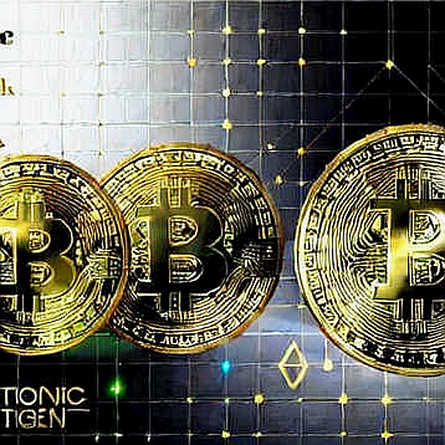
This is not an endorsement of Iran’s regime. It is an observation that the infrastructure we are building—DeFi, decentralized storage, zero-knowledge proofs—provides the toolkit for sovereign actors to opt out of legacy financial control. The JCPOA’s failure is a signal that the market is already voting with its hash: trustless settlement is not a luxury; it is a strategic necessity for any entity that anticipates future sanctions or treaty breaches.
But the data reveals a deeper tension. Iran’s domestic economy remains fragile. Inflation is over 40%, unemployment among youth is crushing, and protests have simmered for years. The shadow fleet brings in dollars, but those dollars do not feed the population. The gap between the protocol-level resilience (oil payments) and the social layer (human welfare) is exactly the kind of disconnect I saw in 2020 when I analyzed Curve governance. The code is law, but the humans are the bug. The DAO treasury of Iran’s economy may survive, but its citizens are being liquidated. This contradiction haunts every decentralized system: high security at the protocol layer does not guarantee fairness at the application layer.
Contrarian: The False Hope of Immutability
The blockchain community loves to cite the JCPOA’s failure as proof that centralized agreements are fragile and that "code is law" provides a better alternative. But this is naive. The JCPOA was not just a set of promises; it was a nuanced mechanism with dispute resolution, snapback clauses, and a multi-stakeholder oracle. Its failure was not because it was centralized, but because the most powerful participant decided to fork. No on-chain governance can prevent a state-backed exit if that state holds the majority of computational or economic power. In Ethereum, that’s what happened with the DAO hack: the core developers forked the chain to restore funds, violating the principle of immutability. States can and will fork when it suits their interest.
Iran’s current strategy—building a parallel economy—is actually an admission that unilateral trustlessness is impossible. They are not replacing the US dollar with a permissionless global currency; they are swapping US dominance for Chinese rails (CIPS) and bilateral barter. This is not decentralization; it is centralization diversification. The same critique applies to many Layer-2 rollups that claim to be trustless but depend on a single sequencer. The DA is overhyped, as I’ve argued for months: 99% of rollups do not generate enough data to need dedicated DA. They are insecure by design, just like the JCPOA.
The contrarian insight is this: silence is the only consensus that never forks. Qalibaf’s words are loud, but the quiet reality is that both sides—Iran and the US—are trapped by their own domestic governance deadlocks. The US Congress will not lift sanctions; the Iranian hardliners will not halt enrichment. The system is gridlocked, not because of code, but because of human incentives. Blockchain cannot fix that. It can only provide an escape hatch for those who can afford to run their own node. The rest will be left behind, as they always are.
Takeaway: The Ghosts We Build
In the void of the JCPOA’s collapse, we find our own gravity. Iran is building a ghost economy—a kingdom of shadows and smart contracts—that operates outside the rules we once took for granted. This is not the future we wanted, but it is the future we are engineering. Every time we design a protocol that eliminates intermediaries, every time we write a governance hook that automates trust, we are building an infrastructure that can be used by the exiled, the sanctioned, and the desperate. The question is whether we are ready for that responsibility.
We built a kingdom of ghosts in the machine. Iran is just the first sovereign to enter. Others will follow. The next time you see a DAO voting on a treasury allocation, remember that the same logic applies to nations moving reserves out of dollar-denominated bonds. The code is not the law. The law is whatever the most powerful node decides to execute. Our job is to ensure that the protocol is robust enough to survive their choices.
To govern the future, we must debug the present. The JCPOA is dead. Long live the ghost chains.