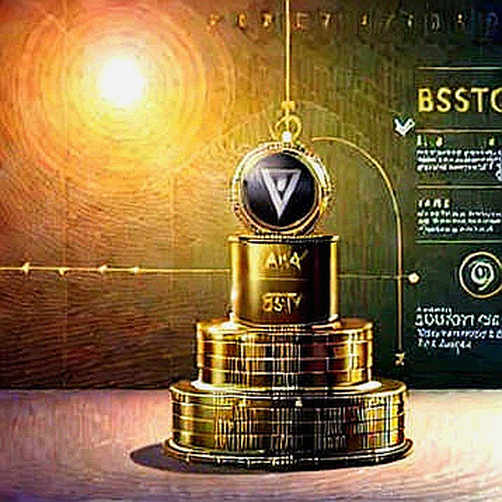
On a Tuesday that felt like any other in the sideways drift of crypto markets, a quiet transaction rippled through the on-chain data. It wasn't a whale moving millions to an exchange, nor a protocol exploit draining a treasury. It was something rarer: a declaration of intent. Changpeng Zhao, the founder of Binance, confirmed that the second-largest anonymous donor to his education initiative, Giggle Academy, was none other than himself. Then, in the same breath, he announced the public address would be converted into a burn address. The keys, effectively, would be thrown into the digital sea.
We audit the code, but who audits the conscience? This is one of those moments where the answer is unexpectedly clear. In a sector often defined by opacity, this was a radical act of closure. The address, which had been a source of community speculation, was not just emptied of its assets; it was rendered inert, a permanent monument to a transaction that can never be undone. This is not merely a technical detail. It is a moral statement about the end of a chapter, and the deliberate severing of a ghost that could have haunted the market for years.
The blockchain, as we know, does not forget. Every move that address ever made, every sats and token that passed through its gates, remains on the public ledger. The act of burning it is a cryptographic gesture of finality. It says: this vessel is no longer a conduit for capital, but a tombstone. For BNB holders, this is a micro-event in the grand scheme of a 150 million supply, a drop of deflation in an ocean of liquidity. But for the market psychologist, it is a powerful signal that the largest known overhang of uncertainty, the possibility of a founder dumping a stockpile, has been permanently removed.
From a technical standpoint, the move is elegant in its simplicity. The address, once used for the donation of BNB and the mysterious 'Binance Life' tokens, is now a graveyard. The private keys are presumably destroyed or lost, rendering the assets inside, if any, inaccessible forever. This is the ultimate de-risking exercise. It eliminates the 'rug pull' scenario that bears often whisper about, where a founder retains a hidden reserve to dump on the market. Based on my experience in the 2020 DeFi summer, where I spent weeks reverse-engineering yield farms that were glorified Ponzi schemes, I know that the greatest value is often in what the team doesn't do. CZ just told us what he will never do.
The cynic in me, the one that survived the 2022 bear market layoffs and the ensuing silence, sees the optics. This is a masterclass in narrative control. After the legal battles and the settlements, the image of a transparent philanthropist is a powerful tool. The act of donation is a stated commitment to a cause, but the act of burning the address is a commitment to the market. It is a message to the community that says, 'I am not a leech on the system; I am a builder.' It is a voluntary act of immolation to prove you are not the arsonist.
But here is the contrarian angle. While the market might shrug this off as a negligible event with less than one percent impact on price, I see it as a blueprint for a larger institutional principle. We are entering a phase where TradFi bridges and ETF custody solutions are trying to minimize trust. Yet here is a single individual, acting on a personal scale, demonstrating a level of integrity that many centralised financial structures fail to meet. He is not just talking about 'Trust Minimization in TradFi Bridges'; he is living it. He is showing that the technology's promise of audibility is only as good as the human willingness to be audited.
The real question is not about the supply of BNB, but about the supply of trust. We have grown accustomed to protocols that fork, teams that abandon, and founders that flip flop. CZ's action, by contrast, is a whisper that resonates louder than the noise. He has turned the speculative cycle of attention into a settled fact. The address is gone. The donations are sent. The conscience is clear.
We audit the code, but who audits the conscience? In this case, CZ has willingly subjected himself to the most unforgiving auditor of all: the public ledger. And he has passed the test by removing himself from the equation. Build not for the peak, but for the plain. The peak is the hype of the donation news; the plain is the steady, unremarkable state of a burned address. He is building for the plain. The question we must ask ourselves as observers is this: if the leader of the largest exchange can afford to be this transparent, what is the excuse for the rest of the industry? The silence of the code is loud, but the silence of the conscience is louder still.