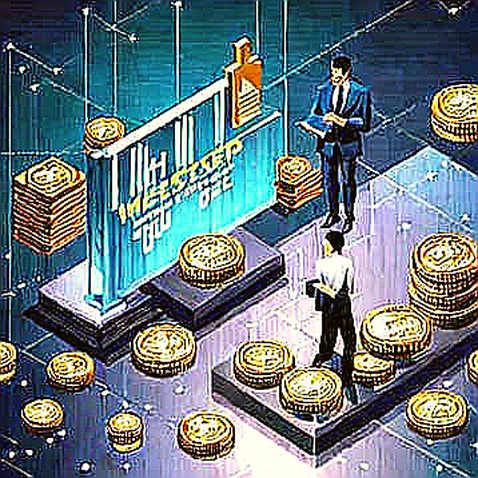
Yield is not a number; it is a narrative of risk. When Binance announced the listing of DOSUSDT perpetual contract on August 11, 2026, 23:00 UTC+8, the market reacted with a familiar flicker of hope. A new token, a new derivative, a new chance to lever up. But the announcement itself was a ghost—a collection of dates, leverage multiples, and settlement currencies. No whitepaper. No team bio. No tokenomics. No utility. Just a ticker: DOS.
I have spent the last decade tracing the echo of trust back to its source code. In 2017, I audited the Status whitepaper and found the gap between decentralized privacy and centralized development. In 2020, I wrote about the invisible social collateral behind MakerDAO’s Dai, watching trust replace banking collateral. In 2021, I retreated from the NFT frenzy, writing a philosophical essay on digital scarcity as spiritual solace. Each time, the lesson was the same: the market’s surface is a narrative, but the real story is hidden in the structural integrity of the underlying code. And here, with DOS, there is almost no code to inspect.
This is a story about what happens when an exchange lists a derivative for a project that might as well be a ghost. We minted ghosts, but we lived in the machine. The announcement is a standard operating procedure: Binance launches a new USDT-margined perpetual contract with up to 20x leverage, effective August 11, 2026, at 23:00 (UTC+8). The token is DOS. The project is unknown. The narrative is empty.
The Context: Perpetual Contracts and the Binance Machine
Perpetual contracts are the backbone of crypto derivatives. They have no expiry, rely on a funding rate mechanism to track the spot price, and allow traders to take leveraged positions. Binance, as the world’s largest exchange by volume, has a mature matching engine and a vast user base. Listing a new perpetual is a liquidity event—it opens the door for speculators, arbitrageurs, and hedgers to trade the token with leverage.
But the market context matters. As of August 2026, we are in a sideways, choppy market. Bitcoin and Ethereum are consolidating, and capital is rotating into smaller-cap assets in search of alpha. The ALT season narrative is weak, but it persists. In this environment, a Binance listing can act as a catalyst for short-term volatility. However, without fundamental data on the project, the listing is a blank canvas—and blank canvases are dangerous.
DOS is not a household name. It is not a Layer-1, a DeFi protocol, or a meme coin with a vibrant community. It is a token that exists in the market, likely with low liquidity and a small holder base. Binance’s decision to list its perpetual suggests that the token has passed some internal checks—likely a smart contract audit and a liquidity assessment. But the project’s team, vision, and tokenomics remain opaque. This is not a red flag; it is a warning that the narrative is missing.
The Core: Narrative Mechanism and Sentiment Analysis
Every listing tells a story. The story of DOSUSDT perpetual is not about the project; it is about the mechanism of leverage and the psychology of traders. Let me walk through the core components:
First, the funding rate. In a perpetual contract, traders pay each other based on the difference between the perpetual price and the spot price. When the perpetual is in contango (price above spot), longs pay shorts. When backwardation, shorts pay longs. This mechanism is designed to keep the contract anchored. But for a low-liquidity token like DOS, the funding rate can be easily manipulated. A whale can open a large long position, push the perpetual price up, and force shorts to pay funding. Then close the position, and the price collapses. The funding rate becomes a tool for extraction, not a fair market signal.
Second, the leverage. 20x means that a 5% move in the token price can liquidate a full position. For a token with unknown fundamentals, such leverage is a recipe for cascading liquidations. The initial liquidity pool will be thin—Binance will provide some liquidity, but not enough to absorb large orders. The first few hours of trading are critical. I have seen this pattern before: the contract opens, price spikes or dumps, and then stabilizes as arbitrageurs step in. But the spike can be engineered. In a low-information environment, the price is not a discovery; it is a construction.
Third, the sentiment. The “Binance effect” was once a guarantee of a pump. But in 2026, the market is more skeptical. Traders have seen countless listings where the price goes up for a few days and then collapses as insiders sell. The narrative around this listing is weak because there is no story to latch onto. The token is a placeholder. The sentiment is a mixture of FOMO (because it’s Binance) and caution (because it’s unknown). The emotional temperature is lukewarm.
Based on my experience auditing ICOs and tracking DeFi yields, I can tell you that the real signal is not in the announcement but in the silence. Truth hides in the silence between the blocks. The silence here is the absence of any project details. The market is being asked to trade a derivative of a ghost.
The Contrarian Angle: The Blind Spots
Most analysts will focus on the potential upside: new liquidity, new traders, new volatility. The contrarian view is that this listing is a net negative for the project’s long-term health. Here’s why:
- Information Asymmetry is Weaponized. The team behind DOS (if it exists) knows the token distribution, the unlock schedule, and the real utility. They can use the perpetual contract to hedge their positions or to manipulate the price. If the team has a large locked supply, they can short the perpetual to lock in profits before the unlock. This is a common pattern: projects listing futures before their major unlocks to offload risk onto retail.
- The “Buy the Rumor, Sell the News” Trap. The announcement was made on August 8, three days before the actual listing. The price may have already pumped on anticipation. When the contract goes live, the market may sell into the liquidity. This is a classic pattern: the event is the catalyst for exit, not entry.
- The Fading Binance Effect. In 2021, a Binance listing was a near-guaranteed 50% pump. By 2025, the effect had diminished to 10-20%. In 2026, with regulatory scrutiny and the rise of DEXs, the effect is even smaller. The market is saturated with tokens. One more perpetual contract is not a reason to buy.
- The Regulatory Shadow. Binance is still under regulatory pressure in many jurisdictions. Offering 20x leverage on a low-cap token may attract attention from regulators like the CFTC or MiCA. If the contract is restricted in certain regions, the liquidity will be fragmented, and the price discovery will be distorted.
The contrarian narrative is that this listing is a trap for the uninformed. The real winners are the market makers and the insiders who can front-run the trading activity. The retail trader who buys the perpetual with 20x leverage is gambling on a ghost.
The Takeaway: What Are We Really Trading?
We minted ghosts, but we lived in the machine. The DOSUSDT perpetual contract is a perfect example of the crypto market’s ability to create financial instruments on top of pure speculation. It is a derivative of a derivative: a token that may have no intrinsic value, now traded with 20x leverage on a centralized exchange. The narrative is not about DOS; it is about the infrastructure of gambling.
For the informed trader, this event is an opportunity to observe market mechanics. Watch the funding rate. Watch the open interest. Watch the liquidation cascade. But do not conflate observation with action. The real question is not whether DOS will go up or down on August 11. The question is why we are trading an asset whose fundamentals are invisible.
I have spent years tracing the echo of trust back to its source code. In this case, the source code is missing. The trust is in the exchange, not in the project. And that is a fragile foundation. The next time you see a Binance listing for an unknown token, ask yourself: what is the narrative? Where is the code? And who is the ghost?

Yield is not a number; it is a narrative of risk. The risk here is not just the 20x leverage. It is the risk of trading a story that nobody has written.